High Protein Diet Plan for Muscle Gain: When I first started my fitness journey, I was honestly very confused about one thing…. protein. Everywhere I looked, people were saying different things. Some said you need chicken and eggs, others said supplements are a must, and as someone who follows a vegan lifestyle, I felt even more lost.
I remember thinking, “Is it even possible for me to build muscle like this?” That doubt stayed in my mind for a long time. But instead of giving up, I decided to experiment and learn slowly. I didn’t follow any strict plan at the beginning. I just started understanding food better and how my body reacts to it.
Over time, I realized something very important — it doesn’t matter whether you are vegetarian, non-vegetarian, or vegan. Muscle gain depends on how well you manage your protein intake, your total calories, and your consistency.
The Simple Truth About Protein and Muscle Gain
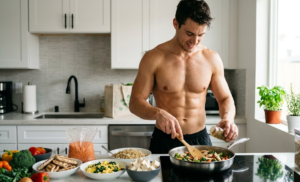
One thing I wish I knew earlier is that protein is just one part of the process, but it’s a very important part. Your muscles need protein to repair and grow after workouts. Without enough protein, your progress becomes very slow, no matter how hard you train.
At the same time, protein alone is not enough. You also need enough calories, proper workouts, and rest. Once I understood this balance, everything became much easier. I stopped chasing “perfect diets” and started focusing on simple, balanced eating.
My Personal Experience as a Vegan (And What You Can Learn From It)
Since I follow a vegan diet, I had to be more mindful about my food choices. In the beginning, I wasn’t getting enough protein, and I could feel it. My workouts felt weak, and I wasn’t seeing any progress.
So I made small changes. I started adding more lentils, chickpeas, tofu, and soy-based foods to my meals. I didn’t change everything overnight. I just made sure that every meal had at least some protein in it.
After a few weeks, I noticed clear improvements. My strength increased, my energy levels improved, and my body started looking more toned. That’s when I realized that even on a vegan diet, muscle gain is absolutely possible.
And the best part is — if it worked for me with limited options, it can definitely work for you whether you are vegetarian, non-vegetarian, or vegan.
How Much Protein Do You Actually Need?
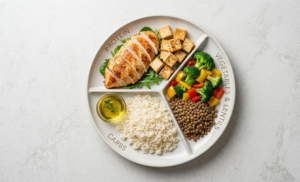
This was one of the biggest questions I had in the beginning, and honestly, it confused me a lot until I simplified it.
A good range to follow is around 1.6 to 2.2 grams of protein per kilogram of body weight. You don’t need to hit the exact number every single day, but staying close to it consistently is what really matters.
Let’s understand this with a simple example. Suppose your body weight is 60 kg. You can multiply it like this:
- 60 × 1.6 = 96 grams (minimum target)
- 60 × 2.2 = 132 grams (upper range)
So, your daily protein intake should be somewhere between 96g to 132g of protein per day.
When I first did this calculation for myself, it became much clearer. Instead of guessing, I knew what I was aiming for. Then I started dividing this protein across my meals, which made it easier to manage without stress.
At first, it may feel difficult to reach this number, but once you start structuring your meals, it becomes much easier.
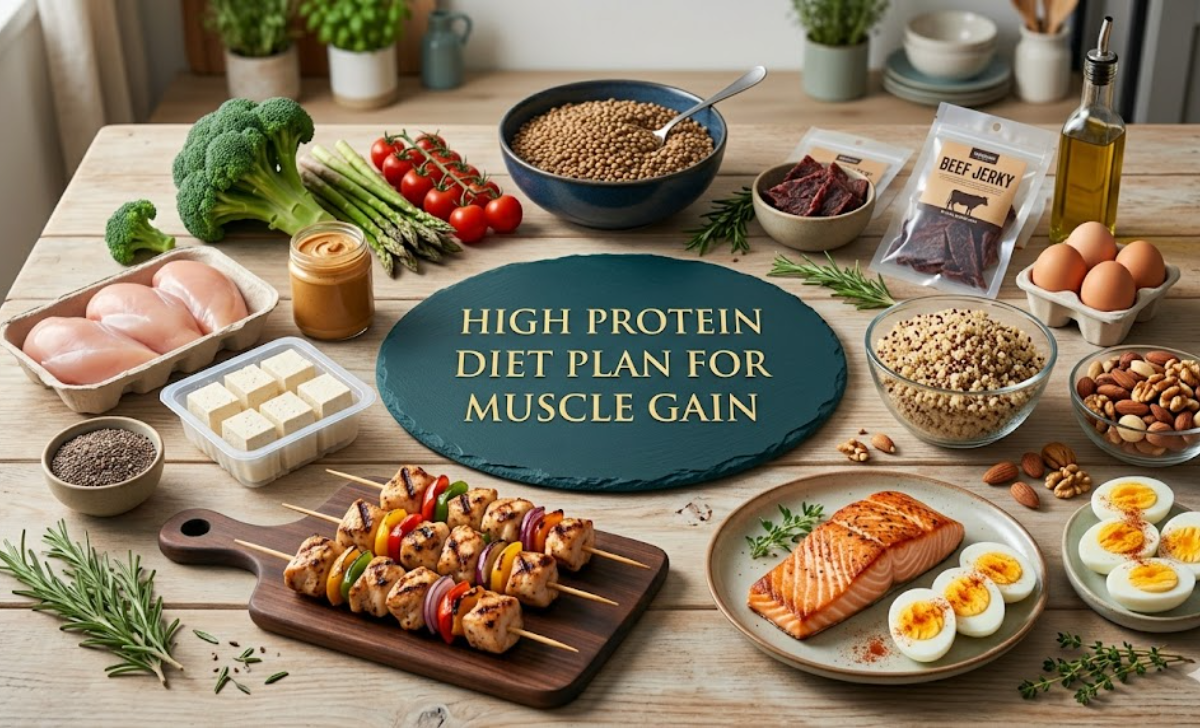
High Protein Diet Plan for Muscle Gain (Veg, Non-Veg & Vegan)
Instead of limiting yourself, it’s better to understand all available options and choose what fits your lifestyle.
Here’s a simple table covering all types of diets:
| Food Category | Food Item (Quantity) | Protein (Approx) |
|---|---|---|
| Vegetarian | Cottage Cheese/ Paneer (100g) | 18g |
| Vegetarian | Milk (1 glass – 250ml) | 8g |
| Vegetarian | Curd (1 bowl – 200g) | 10g |
| Vegetarian | Lentils/Dal (1 cup cooked) | 9g |
| Non-Veg | Chicken breast (100g) | 27g |
| Non-Veg | Eggs (1 large) | 6g |
| Non-Veg | Fish (100g) | 22g |
| Vegan | Tofu (100g) | 10g |
| Vegan | Soy chunks (50g dry) | 25g |
| Vegan | Chickpeas (1 cup cooked) | 14g |
| Vegan | Beans (1 cup cooked) | 12g |
| Common Foods | Oats (50g) | 6g |
| Common Foods | Peanuts (30g handful) | 7g |
| Common Foods | Almonds (30g) | 6g |
I personally relied more on the vegan options, but this table shows that no matter your diet type, there are plenty of ways to reach your protein goals.
My Simple Daily Diet Plan for Muscle Gain
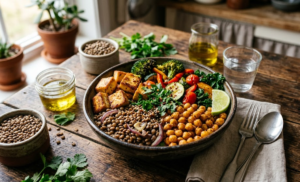
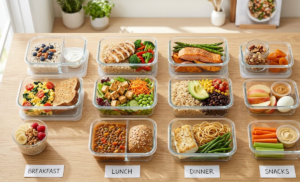
I always kept my diet simple because I didn’t want it to feel stressful. In the morning, I usually started with oats, plant milk, banana, and nuts. It was easy to prepare and gave me a good mix of carbs and protein.
For lunch, I preferred simple home-cooked meals like rice or roti with dal, vegetables, and a protein source like tofu or chickpeas. If you are vegetarian or non-vegetarian, you can easily replace this with Paneer(Cheese) or chicken.
In the evening, I had light snacks like fruits, peanuts, or a sandwich. It helped maintain my energy levels, especially before workouts.
Dinner was again simple with roti, vegetables, and a protein source like soy chunks or dal. Before sleeping, I sometimes had plant milk or a light snack to support recovery.
 If you want to understand how I used this diet along with a smart muscle-building approach, you can also check my guide on How to Build Muscle with Lean Bulking Without Getting Fat (Simple Way at Home) where I explain how food and training work together.
Workout Matters Just as Much as Diet
At one point, I thought diet alone would give results, but that’s not true. You need proper workouts to actually use that protein for muscle growth.
I followed a basic routine where I trained different muscle groups on different days. Some days were focused on upper body, some on lower body, and I always included rest days.
I didn’t start with heavy lifting. I focused on consistency and proper form. Slowly, as my diet improved, my strength also improved, and I could see better results.
If you are someone who doesn’t go to the gym, you can still make progress. I’ve shared a simple plan in my post No Gym? No Problem! Easy Beginner Home Workout Routine for Weight Loss and Strength, which helped me stay consistent even at home.
Small Habits That Made a Big Difference for Me
Looking back, I realize that small habits played a bigger role than any big change. I made sure I stayed hydrated, got enough sleep, and didn’t skip meals.
I also stopped expecting quick results. Instead of checking the mirror every day, I focused on weekly progress. That mindset shift helped me stay consistent without getting frustrated.
Mistakes I Made in the Beginning
In the beginning, I made simple but important mistakes. I didn’t eat enough protein, and I relied too much on carbs. I also skipped meals sometimes, which affected my energy levels.
Another mistake was overthinking everything. I kept looking for perfect plans instead of just starting simple. Once I stopped doing that and focused on consistency, things started improving.
Can This Diet Work for You Too?
Yes, it absolutely can. Whether you eat vegetarian, non-vegetarian, or vegan food, muscle gain is possible if you focus on protein, calories, and consistency.
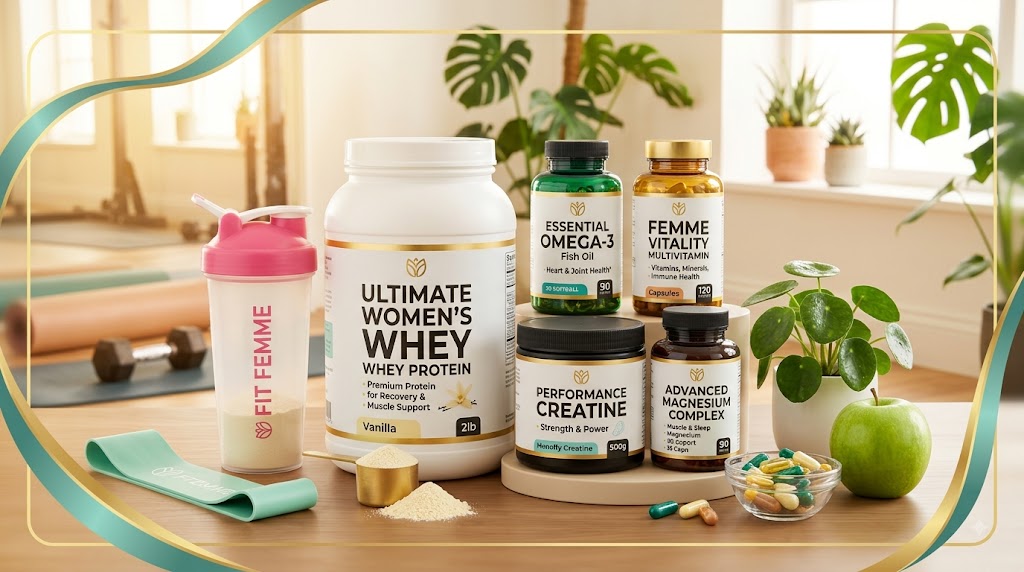
You don’t need expensive supplements or complicated meal plans. You just need a simple structure and the discipline to follow it regularly.
If I could make progress while figuring things out as a beginner, you can definitely do it too.
Final Thoughts:
If there’s one thing I learned from my journey, it’s this — don’t overcomplicate fitness. You don’t need perfect diets or extreme routines.
Just focus on eating enough protein, training regularly, and staying consistent. That’s it.
Start small, stay patient, and trust the process. Results will come.
FAQs:
1. What is a high protein diet for muscle gain?
A high protein diet means eating enough protein daily to support muscle repair and growth, along with balanced carbs and fats.
2. Can I build muscle on a vegetarian or vegan diet?
Yes, you can build muscle on vegetarian and vegan diets by including enough protein-rich foods like paneer, lentils, tofu, and soy products.
3. How much protein do I need daily?
You should aim for around 1.6 to 2.2 grams of protein per kilogram of your body weight for effective muscle gain.
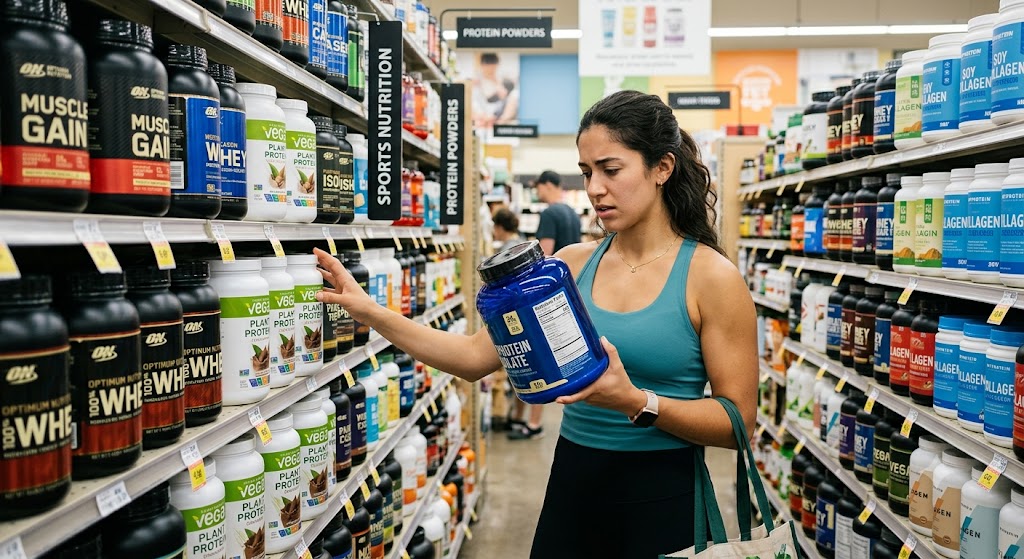
4. Do I need protein powder for muscle gain?
No, protein powder is optional. You can meet your protein needs through whole foods if your diet is properly planned.
5. Which protein sources are best for beginners?
Good beginner-friendly protein sources include eggs, chicken, paneer, tofu, lentils, and peanuts depending on your diet type.
6. How long does it take to see results?
With consistent diet and workouts, you can start noticing changes within 6 to 8 weeks.
For more simple fitness tips, beginner-friendly workout plans, and easy habits that actually fit into a busy life, explore more blogs on AasthaFitVerse like Home Workout Plans, Fat Loss Diet Guides, and Daily Fitness Habits—everything is designed to help you stay consistent without stress