How Many Calories Should You Eat to Lose Fat?: When I first started trying to lose fat, calories felt confusing. Everywhere I looked, there were different numbers, formulas, and strict diet plans. Some said eat very low calories, others said eat more. It became overwhelming very quickly.
Then I realized something simple….fat loss is not about extreme dieting, it’s about eating slightly less than your body needs. Once I understood this, everything became easier and more practical to follow.
What Does “Calories for Fat Loss” Actually Mean?
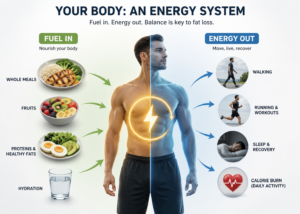
Calories are just energy that your body gets from food. Your body needs a certain number of calories every day to maintain your current weight. This is called maintenance calories.
If you eat more than that, you gain weight. If you eat less than that, you lose weight. That’s the basic idea.
Just like a car needs gasoline to drive, your body needs calories to do everything. You use calories when you run or lift weights, but you also use them for things you don’t think about—like breathing, keeping your heart beating, and even sleeping.
How Fat Loss Happens
When you eat a calorie deficit (slightly less than you need), your body still needs that extra energy to keep you moving. Since it isn’t getting enough from your food that day, it goes to its “storage tanks.”
In your body, those storage tanks are your body fat. Your body “burns” some of that stored fat to make up the difference in energy. This is how you lose fat over time.
 If your main goal is to reduce stubborn belly fat, you can also check my guide on How to Lose Belly Fat at Home Without Equipment (Beginner Guide That Actually Worked for Me) where I shared a simple routine that gave me real results.
You Don’t Have to Be Perfect
A common mistake is thinking you have to eat as little as possible. If you eat too little, you will feel tired and grumpy. Fat loss works best when the “deficit” is small.
-
Maintenance: 2,000 calories (Weight stays the same)
-
Large Deficit: 1,000 calories (You feel starving and quit)
-
Fat Loss Goal: 1,700–1,800 calories (You lose fat slowly and still feel good)
What You Eat Still Matters
While the number of calories determines if you lose weight, the kind of food determines how you feel.
-
Protein (like chicken, eggs, or beans) helps keep your muscles strong while you lose fat.
-
Fiber (like vegetables and fruits) keeps you feeling full so you don’t get hungry between meals.
So for fat loss, you don’t need to starve. You just need to eat slightly fewer calories than your body uses daily. This is called a calorie deficit.
Simple Way to Calculate Your Fat Loss Calories
You don’t need complicated formulas to get started. A simple method works well for beginners.
| Step | What to Do |
|---|---|
| Step 1 | Multiply your body weight (kg) × 30 |
| Step 2 | That gives your maintenance calories |
| Step 3 | Subtract 300–500 calories |
| Step 4 | That’s your fat loss calorie target |
For example, if your weight is 70 kg:
70 × 30 = 2100 calories (maintenance)
2100 – 400 = 1700 calories for fat loss
This is not perfect, but it’s a very good starting point.
Why You Should Not Cut Calories Too Much
In the beginning, I made the mistake of eating too little because I thought faster fat loss is better. But it only made me feel weak, tired, and less active.
When you cut calories too aggressively, your body slows down, your energy drops, and it becomes harder to stay consistent. That’s why a small calorie deficit works much better in the long run.
Fat loss is not a race. It’s something you build step by step.
How I Managed Calories Without Overthinking
I didn’t track every single calorie strictly. Instead, I focused on eating simple, balanced meals and controlling portion sizes.
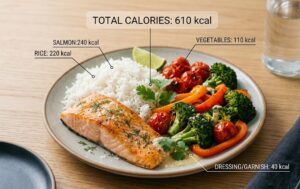
A simple rule is to fill half your plate with vegetables, one-quarter with protein (like Lentils, Cottage Cheese(Paneer), or Chicken), and the last quarter with your carbs (like Rice or Bread). This naturally keeps your calories in check because vegetables are low in calories but take up a lot of space, making you feel like you are eating a huge, satisfying meal.
When you cook at home, you are the boss of the ingredients. You can use less oil and salt than a restaurant would. By adding more protein, such as eggs or lentils, you stay full for much longer. Protein is “filling” fuel; it tells your brain you’re satisfied, which stops you from reaching for snacks an hour after lunch.
The “Crowding Out” Method
Instead of telling yourself “I can’t eat junk food,” focus on “crowding it out” with good stuff. If you promise yourself a big bowl of fruit or a salad before your main meal, you’ll naturally have less room for the high-calorie snacks later. It’s about adding healthy habits until there’s simply no time or hunger left for the unhealthy ones. This keeps your mind calm and your body happy.
This simple approach helped me stay consistent without feeling stressed about numbers.
Example Daily Calorie Plan (Simple View)
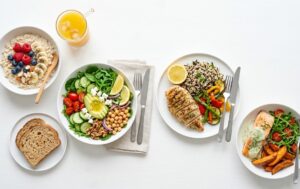
The Universal Balanced Meal Plan
| Meal Time | Global Food Options | Why it Works | Approx. Calories |
| Breakfast | The Starter: 2 Eggs (any style) + 1 slice of whole-grain toast OR a bowl of oatmeal with berries. | High protein or slow-burn carbs to wake up your metabolism. | 300–400 |
| Lunch | The Power Plate: A palm-sized portion of protein (Chicken, Tofu, Fish, or Beans) + 1 cup of grains (Rice, Bread/Roti, Lentils, Quinoa, or Pasta) + a large pile of greens. | The fiber from the greens fills your stomach for very few calories. | 500–600 |
| Snack | The Bridge: A medium piece of fruit (Apple/Banana) OR a small handful of raw nuts (Almonds/Walnuts). | Prevents the “energy crash” that leads to overeating at dinner. | 150–200 |
| Dinner | The Refuel: Grilled/Baked protein + a double serving of roasted or steamed vegetables (Broccoli, Peppers, Carrots). | Keeping carbs lower at night can help some people feel less bloated. | 400–500 |
How to Customize This Anywhere
No matter where you live, you can follow these three simple rules to keep the calories in check without a scale:
The Hand Rule:
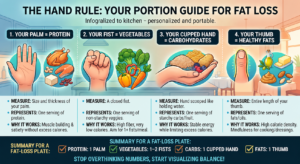
1. Your Palm = Protein
-
The Measurement: Look at the size and thickness of your palm (excluding your fingers).
-
What it represents: This is one serving of protein, like a piece of chicken, fish, tofu, or a serving of beans.
-
Why it works: Protein is essential for muscle, but it is calorie-dense. Using your palm ensures you get enough to stay full without overdoing the calories.
2. Your Fist = Vegetables
-
The Measurement: Make a closed fist.
-
What it represents: This is one serving of non-starchy vegetables (like broccoli, spinach, carrots, or peppers).
-
Why it works: Vegetables are very low in calories but high in fiber. You should aim for at least one “fist” at every meal to fill up your stomach physically.
3. Your Cupped Hand = Carbohydrates
-
The Measurement: Scoop your hand as if you are holding water.
-
What it represents: This is one serving of starchy carbs or fruits, such as rice, pasta, potatoes, or berries.
-
Why it works: Carbohydrates provide energy, but eating too many is the easiest way to accidentally go over your calorie goals. Limiting them to a “cupped hand” keeps your energy stable while supporting fat loss.
4. Your Thumb = Healthy Fats
-
The Measurement: The entire length of your thumb.
-
What it represents: This is one serving of fats, like oils, butter, nut butters, or seeds.
-
Why it works: Fats are very high in calories (9 calories per gram). Even a little too much can stall fat loss, so using your thumb helps you stay mindful of things like cooking oil or salad dressings.
Drink Water First:
Have a glass of water 15 minutes before your meal. Often, our brains mistake thirst for hunger, and this simple trick prevents overeating.
The “Plus One” Veggie Rule:
Whatever you are eating, whether it’s a taco, a bowl of curry, or a sandwich- try to add one extra vegetable to it. It adds volume to the meal so you feel full without adding heavy calories.
You don’t need exotic “superfoods.” Just pick the whole foods available in your local market and follow the proportions above. Consistency beats perfection every time!
How Activity Level Affects Your Calories

Your daily movement also affects how many calories you need. If you sit most of the day, your calorie needs are lower. If you are active or workout regularly, your body needs more energy.
When I started adding workouts like home training and daily movement, I noticed I could eat slightly more while still losing fat. That made the process easier and more enjoyable.
If you are looking for a structured daily routine, I also shared a complete plan in Home Workout Plan for Fat Loss for Beginners (30 Minutes Daily)! which is easy to follow and perfect for starting out.
Signs You Are Eating the Right Calories
Instead of only trusting numbers, I also paid attention to how my body felt.
If I had enough energy, wasn’t constantly hungry, and saw slow fat loss over weeks, I knew I was on the right track. If I felt too tired or weak, I knew I needed to adjust my calories.
Listening to your body is just as important as calculating numbers.
Common Mistakes Beginners Make
Many beginners think that if cutting a few calories is good, then cutting all calories must be better. They drop their food intake drastically overnight. This usually backfires because your body goes into a “defense mode.” You end up feeling exhausted, your cravings skyrocket, and eventually, you might binge-eat because the hunger becomes too much to handle.
-
The Fix: Aim for a “slow and steady” approach. It is better to eat a little more and stay consistent for a month than to eat almost nothing and quit after three days.
Another mistake is expecting fast results in a few days. If you don’t see a change in three days, you might feel like you’re failing, even though your body is actually changing on the inside.
-
The Fix: Measure progress in weeks, not days. Focus on “non-scale victories,” like having more energy, your clothes fitting better, or feeling stronger during your daily routine.
Some people also focus only on calories and ignore food quality. Technically, you can lose weight eating only cookies as long as you stay under your calorie limit. However, you will feel terrible. 1,500 calories of processed snacks will leave you feeling hungry and “foggy,” while 1,500 calories of whole foods (like vegetables, grains, and proteins) will keep you full and focused.
-
The Fix: Think of calories as your budget and nutrients as your investment. You want to spend your budget on foods that give you a high return, like better skin, more muscle, and lasting energy.
A very common mistake is thinking a 20-minute walk “earns” you a large pizza. Exercise is amazing for your heart and mood, but it actually burns fewer calories than most people think.
-
The Fix: Treat exercise as a way to get healthy and strong, but let your nutrition do the heavy lifting for fat loss. Don’t try to “exercise away” a poor diet; it’s much easier to simply eat balanced meals from the start.
Can This Simple Method Work for You?
Yes, it can work for almost anyone starting their fat loss journey. You don’t need perfect numbers or strict tracking in the beginning.
Think of fat loss like a savings account. You don’t need to deposit a million dollars at once; you just need to put in a small amount consistently. By making tiny adjustments- like swapping a sugary snack for a piece of fruit or adding a “fist” of vegetables to your dinner- you create a calorie deficit that adds up. In a few months, those small, painless changes result in significant body transformation without you ever feeling like you were “on a diet.”
If you want a real-life example of simple fat loss without strict dieting, you can read How I Helped My Mom Lose 5kg in 30 Days Naturally Without Strict Diet or Gym!, where I explained practical steps that actually worked.
Progress Is the Best Teacher
You don’t need a perfect plan on Day 1. Start with these simple rules and watch how your body responds over two weeks.
-
Feeling too hungry? Increase your protein (the palm).
-
Weight not moving? Slightly reduce your carbs (the cupped hand).
-
Feeling low on energy? Add a bit more healthy fat (the thumb).
This “listen and adjust” method is exactly how long-term transformations happen. Just estimate your calories, stay consistent, and adjust slowly based on your progress. That’s what worked for me, and it can work for you too.
Final Thoughts:
You don’t need complicated formulas or strict diets to lose fat. A simple calorie deficit, balanced meals, and consistency are enough.
Start small, stay patient, and don’t rush results. Fat loss takes time, but it becomes much easier when you keep things simple.
FAQs:
1. How many calories should I eat to lose fat?
Eat about 300–500 calories less than your maintenance level.
2. Can I lose fat without counting calories?
Yes, by controlling portions and eating balanced meals.
3. Is eating very low calories good for fat loss?
No, it can slow your progress and reduce energy.
4. How fast can I lose fat?
Healthy fat loss is slow and steady over weeks.
5. Should I track calories daily?
Not necessary for beginners, but it can help.
6. Does exercise affect calorie needs?
Yes, more activity means you can eat slightly more.
For more simple fitness tips, beginner-friendly workout plans, and easy habits that actually fit into a busy life, explore more blogs on AasthaFitVerse like Home Workout Plans, Fat Loss Diet Guides, and Daily Fitness Habits—everything is designed to help you stay consistent without stress