


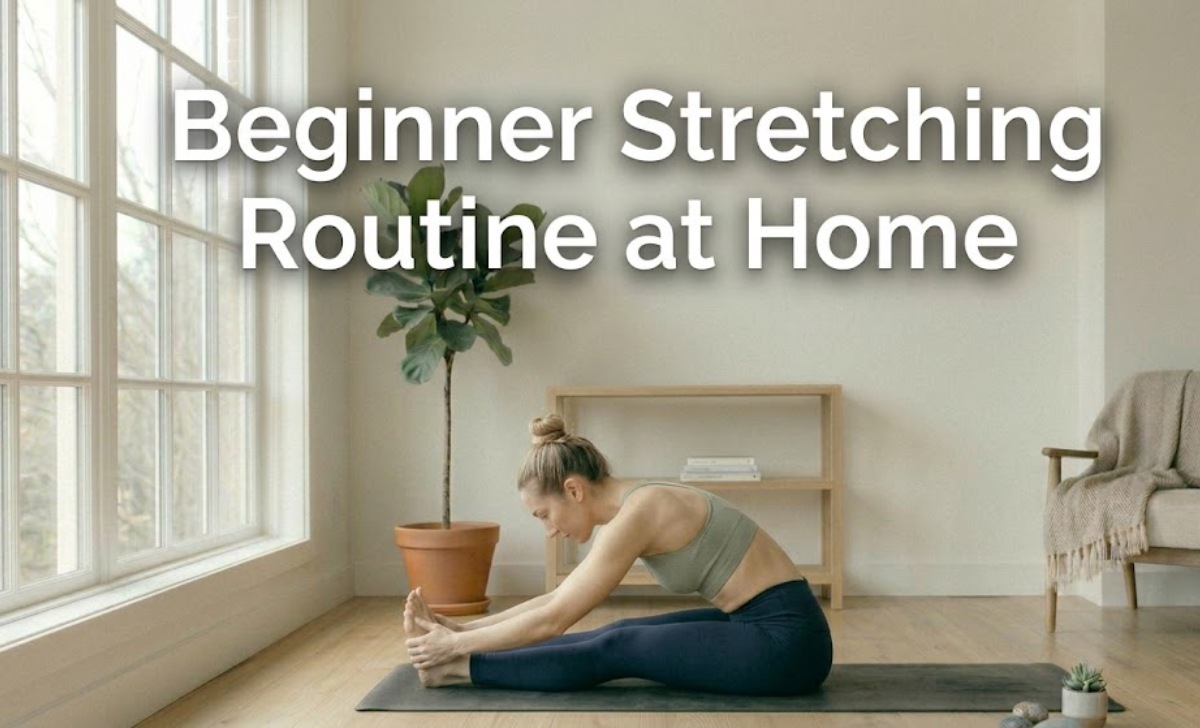
Simple Stretching Routine for Beginners at Home: Honestly, stretching was something I used to ignore a lot. I thought it wasn’t that important and only focused on workouts. But slowly, my body started feeling tight, especially my back and legs, and even simple movements didn’t feel smooth. That’s when I finally gave stretching a chance….nothing big, just a few minutes daily at home. And I’m telling you, within days, my body started feeling lighter and more relaxed. If you’re someone who feels stiff or tired, this might help you more than you expect.
Why Stretching Matters More Than You Think
Stretching is often seen as something optional, something people do only if they have extra time. But in reality, it plays a very important role in overall fitness and daily comfort. For beginners especially, the body is not used to regular movement. Muscles may feel tight, posture may not be ideal, and even simple activities can sometimes feel uncomfortable.
A simple stretching routine helps the body slowly adapt to movement. It improves flexibility, reduces stiffness, and makes everyday actions like bending, walking, or even sitting feel easier. Over time, it also supports better posture and reduces the risk of small injuries that often happen due to tight muscles.
Another important benefit is how stretching makes the body feel. It brings a sense of lightness and relaxation that many people don’t realize they are missing until they start. Even a short daily routine can make a noticeable difference.
A Simple Daily Stretching Structure That Works
For beginners, keeping things simple is the best approach. A stretching routine does not need to be long or complicated to be effective. In fact, shorter and consistent sessions are much more helpful than long sessions done occasionally.
Here is a simple structure that can be followed daily:
| Time | Activity | Duration |
|---|---|---|
| Warm-up | Light movement | 2–3 minutes |
| Stretching | Full body stretches | 10–15 minutes |
| Relaxation | Deep breathing | 2–3 minutes |
This structure keeps the routine easy to follow and ensures that the body is properly prepared before stretching and relaxed afterward.


Preparing the Body Before Stretching
Before starting any stretch, it is important to gently prepare the body. Stretching cold muscles can feel uncomfortable and less effective. A short warm-up helps increase blood flow and makes the muscles more ready to stretch.
Simple movements like walking in place, rotating the arms, or gently moving the neck and shoulders are enough. This does not require much effort or time, but it makes the entire routine feel smoother and safer.
When the body is slightly warm, stretching feels more natural and less forced. It also helps in going a little deeper into each stretch without discomfort.
Full Body Stretching Routine with Easy Exercises
A good stretching routine should cover the entire body rather than focusing on just one area. This ensures balance and helps avoid stiffness in different parts of the body. Each stretch should be done slowly, without rushing, and held for about 15–20 seconds.
1. Neck Stretch (Relieving Daily Tension)
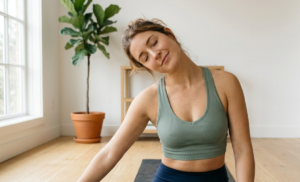

The neck is one of the most commonly stiff areas, especially for people who spend time on phones or computers. A gentle neck stretch can help release that built-up tension.
To do this, slowly tilt the head to one side, bringing the ear closer to the shoulder. Hold the position comfortably, then switch to the other side. The movement should be slow and controlled, without any sudden motion.
This simple stretch helps reduce tightness and improves comfort in the upper body.
2. Shoulder Stretch (Improving Upper Body Mobility)
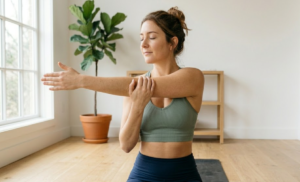

The shoulders carry a lot of tension, especially after long hours of sitting or working. Stretching them regularly helps improve mobility and reduce stiffness.
Bring one arm across the chest and use the other hand to gently press it closer. Keep the shoulders relaxed while holding the stretch. After a few seconds, switch sides.
This stretch helps loosen up the shoulder area and supports better posture over time.
3. Overhead Arm Stretch (Opening the Upper Body)
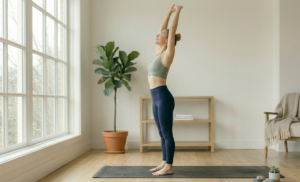

Raising both arms overhead and stretching upwards is a simple yet effective movement. It helps lengthen the upper body and improves flexibility in the arms and shoulders.
The stretch can be made slightly deeper by leaning gently to each side. This also engages the sides of the body and adds more flexibility to the routine.
This movement feels refreshing and is especially useful at the start of the routine.
4. Cat-Cow Stretch (For Spine and Back Flexibility)
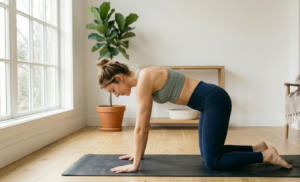

The cat-cow stretch is a gentle movement that works on the spine. It is done by getting on hands and knees, then slowly arching the back upward and lowering it down in a smooth motion.
This stretch is not about holding one position but about moving slowly with control. It helps improve spinal flexibility and reduces stiffness in the back. It also creates a calming rhythm when combined with breathing.
5. Standing Forward Bend (Stretching the Back and Legs)
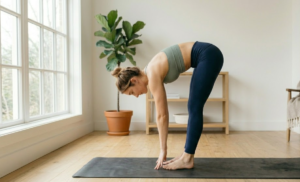

This stretch involves bending forward from a standing position and reaching towards the toes. The knees can be slightly bent if needed, especially for beginners.
It stretches the hamstrings and lower back, which are often tight due to sitting or lack of movement. The key here is not to force the stretch. Going as far as comfortable is enough.
6. Quad Stretch (Relaxing the Thigh Muscles)
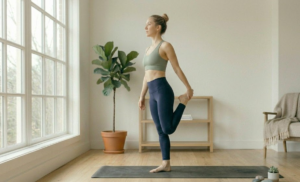

The front part of the thighs can become tight, especially after walking, running, or standing for long periods. The quad stretch helps release that tension.
Standing on one leg, the other foot is held behind and gently pulled towards the body. Balance can be maintained by holding a wall or support.
This stretch improves flexibility in the legs and supports smoother movement during daily activities.
7. Seated Hamstring Stretch (Improving Leg Flexibility)
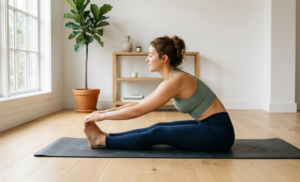

Sitting on the floor with one leg extended and the other bent, reaching toward the toes of the extended leg creates a deep but gentle stretch.
This helps improve flexibility in the back of the legs and reduces tightness that builds up over time. The stretch should feel comfortable and controlled.
8. Cobra Stretch (Opening the Chest and Lower Back)
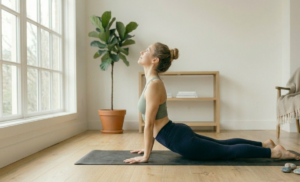
The cobra stretch is done by lying on the stomach and lifting the upper body using the arms while keeping the lower body relaxed.
This stretch opens up the chest and gently stretches the lower back. It is especially helpful for people who sit for long hours, as it balances that posture.
9. Child’s Pose (Deep Relaxation Stretch)
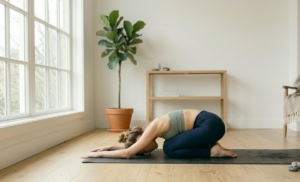
Child’s pose is one of the most calming stretches. Sitting back on the heels and extending the arms forward creates a gentle stretch for the back and shoulders.
This position allows the body to relax fully and is perfect for ending the routine. It helps release tension and calm the mind.
10. Calf Stretch (Supporting Lower Leg Mobility)

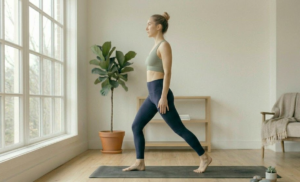
The calves are often ignored but are important for movement and balance. Tight calves can affect walking and flexibility.
Standing with one foot forward and one foot back, pressing the back heel into the ground creates a stretch in the calf.
This helps improve lower body mobility and stability.
The Role of Breathing During Stretching
Breathing plays a very important role in stretching. Slow and steady breathing helps the body relax and allows the muscles to stretch more naturally.
Inhaling deeply and exhaling slowly while holding each stretch makes the experience more effective and calming. Over time, this also helps reduce stress and improves focus.
Common Mistakes to Avoid
One common mistake is trying to stretch too hard. Stretching should never feel painful. It should feel gentle and controlled.
Another mistake is rushing through stretches without holding them properly. Taking time with each movement makes a big difference.
Listening to the body and staying patient is the key to improvement.
What to Expect Over Time
Stretching does not show instant results, but it works steadily. The body starts feeling less stiff, movements become smoother, and flexibility improves gradually.
Daily activities feel easier, and the body feels more relaxed overall. These small changes add up over time.
❓ FAQs
1. How long should a beginner stretch daily?
A simple 10–15 minute routine is enough to start with.
2. Is it okay to stretch every day?
Yes, daily stretching is safe and helpful.
3. Should stretching feel painful?
No, it should feel gentle, not painful.
4. When is the best time to stretch?
Any time that fits your routine—morning, evening, or after workouts.
5. Do I need equipment?
No, all stretches can be done at home without equipment.
6. How long does it take to improve flexibility?
You may start feeling changes in a few weeks with regular practice.
Final Thoughts
Stretching is one of the simplest habits that can make your body feel better every day. It doesn’t require much time or effort, but the benefits are real and long-lasting.
Keeping it simple and doing it regularly is what makes it effective. Over time, it becomes a natural part of your routine and something your body starts to enjoy.
👉 For more simple fitness routines, home workouts, and easy daily tips, follow AasthaFitVerse and keep your fitness journey simple, consistent, and stress-free 💪
No Gym? No Problem! Easy Beginner Home Workout Routine for Weight Loss and Strength
[…] You can follow my Simple Stretching Routine for Beginners for better […]
[…] For flexibility and recovery, try Simple Stretching Routine for Beginners at Home (Full Body Flexibility Guide for Daily Fitness). […]
[…] Don’t forget stretching before and after workout. For more details you can read this: Simple Stretching Routine for Beginners at Home (Full Body Flexibility Guide for Daily Fitness) […]