How to Strengthen Your Core for Beginners at Home Without Equipment: If you have ever searched for ways to get stronger, improve your posture, or reduce back discomfort, you have probably heard people talk about building a strong core. The problem is that many beginners think core training is only about getting visible abs. In reality, your core is much more important than that.
Your core is involved in almost every movement you make during the day. Whether you are walking, climbing stairs, lifting shopping bags, bending down to tie your shoes, or even sitting at your desk, your core muscles are working to keep your body stable and balanced. A weak core can make everyday activities feel harder, while a strong core can make movement feel easier and more comfortable.
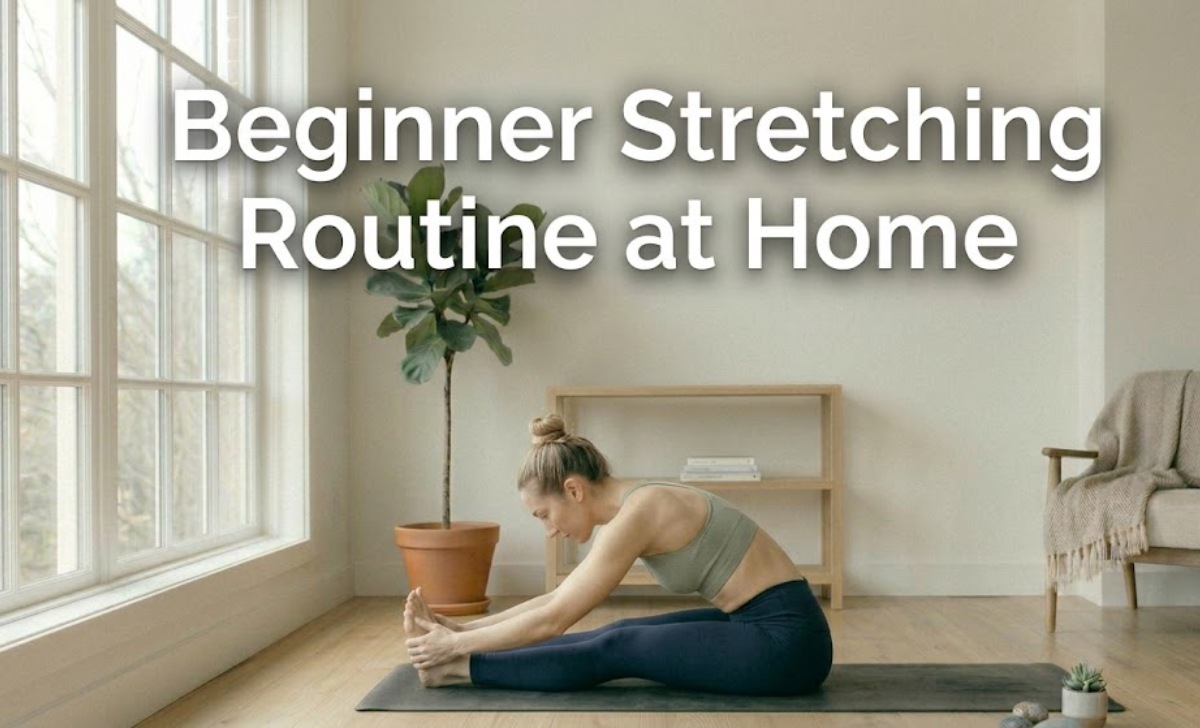
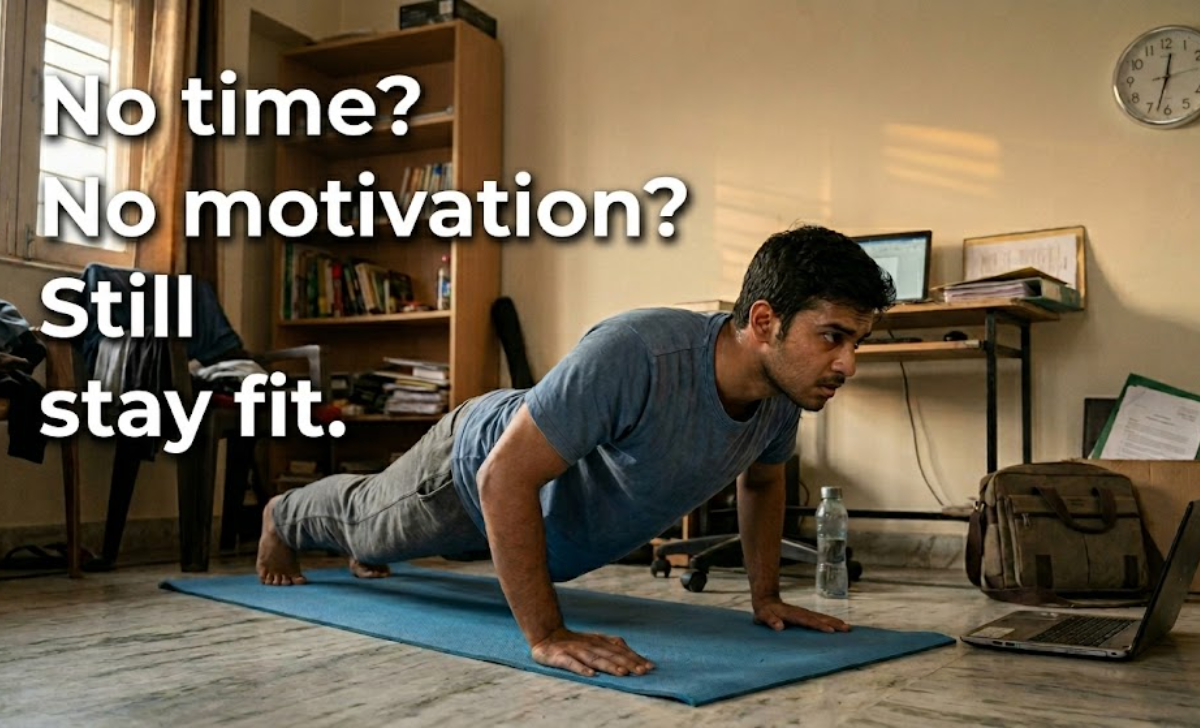
The good news is that you do not need a gym membership, expensive fitness equipment, or advanced workout knowledge to strengthen your core. With a few simple exercises and a consistent routine, you can start building core strength right from your living room.
In this complete beginner’s guide, you will learn what your core actually is, why core strength matters, the best beginner-friendly exercises, common mistakes to avoid, and a simple workout plan that you can start today.
What You Are Getting in This Blog
Most articles simply list a few exercises and expect you to figure everything out on your own. This guide goes much deeper and gives you a complete beginner roadmap.
In this blog, you will learn:
- What the core really is and why it matters
- How a strong core improves daily life
- Beginner-friendly exercises with step-by-step instructions
- A simple weekly workout plan
- Common mistakes that slow progress
- Practical tips to see better results
- An exercise table for quick reference
- Answers to the most common beginner questions
By the time you finish reading, you will know exactly how to start strengthening your core safely and effectively from home.
What Is Your Core and Why Does It Matter?
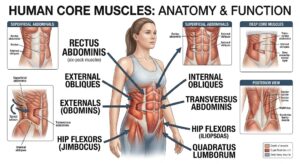
When most people hear the word “core,” they immediately think about abdominal muscles. While your abs are part of the core, they are only one piece of the puzzle.
Your core is a group of muscles that work together to support your spine and help your body stay balanced. These muscles include the abdominal muscles at the front of your body, the oblique muscles on your sides, the muscles around your pelvis, the muscles in your hips, and the muscles in your lower back.
You can think of your core as the central support system of your body. Just as a building needs a strong foundation, your body needs a strong core. If your core muscles are weak, other parts of your body often have to work harder, which can lead to poor posture, discomfort, and reduced performance during physical activities.
A strong core creates a stable base for movement. This means you can move more efficiently, maintain better balance, and reduce unnecessary strain on your joints and muscles.
Benefits of Building Core Strength at Home
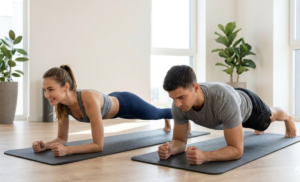
One of the biggest benefits of core training is that it improves much more than just your appearance. Many beginners start core exercises hoping to get a flatter stomach, but they quickly discover several other advantages.
A stronger core helps improve posture by supporting your spine and keeping your body aligned. This can be especially helpful if you spend many hours sitting at a desk or looking down at your phone.
Core strength also plays an important role in balance and stability. Whether you are walking on uneven ground, carrying groceries, or exercising, your core helps keep your body steady.
Another major benefit is the support it provides to your lower back. Many people experience lower back discomfort because the surrounding muscles are weak. Strengthening your core can help reduce pressure on the lower back and improve overall movement.
People with strong core muscles often find that everyday activities become easier. Tasks such as lifting objects, bending down, standing for long periods, and climbing stairs require less effort because the body can move more efficiently.
Signs That Your Core May Be Weak
Many people have a weak core without realizing it. Since core muscles are involved in everyday movement, weakness can show up in different ways.
You may have a weak core if you often experience lower back discomfort, struggle to maintain good posture, lose balance easily, or feel tired after standing for a short time. Some people notice that they slouch frequently or find basic exercises more challenging than expected.
A weak core does not mean you are out of shape. It simply means those muscles need more attention and training. The good news is that beginners can improve core strength relatively quickly with consistent practice.
Best Core Exercises for Beginners at Home
The following exercises are simple, safe, and highly effective for beginners. They require no equipment and can be done in a small space.
1. Plank
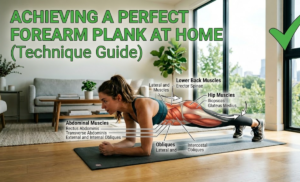
The plank is one of the most effective exercises for building overall core strength because it activates multiple muscle groups at the same time.
To perform a plank, place your forearms on the floor and extend your legs behind you. Keep your body in a straight line from your head to your heels. Tighten your stomach muscles and avoid letting your hips drop.
When starting out, focus on holding the position for 15 to 20 seconds. As your strength improves, you can gradually increase the duration.
The plank teaches your core muscles how to stabilize your body, which is a key part of building strength and preventing injuries.
2. Dead Bug
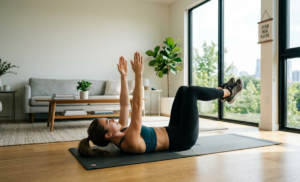
The dead bug is a favorite among fitness professionals because it strengthens the core without placing stress on the lower back.
Begin by lying on your back with your arms pointing toward the ceiling and your knees bent at 90 degrees. Slowly lower one arm and the opposite leg toward the floor while keeping your core engaged. Return to the starting position and switch sides.
This exercise helps improve coordination, stability, and body control, making it perfect for beginners.
3. Bird Dog
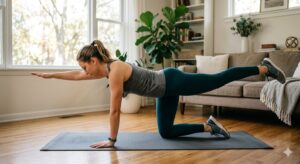
The bird dog is another excellent exercise that improves both balance and core stability.
Start on your hands and knees. Slowly extend one arm forward while extending the opposite leg behind you. Hold the position briefly before returning to the starting position and switching sides.
The bird dog challenges your body to stay stable while moving, which helps strengthen the deep core muscles that support your spine.
4. Glute Bridge
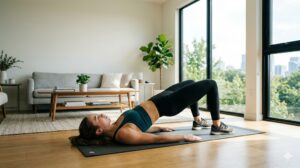
Although many people think of the glute bridge as a lower-body exercise, it is also excellent for developing core strength.
Lie on your back with your knees bent and feet flat on the floor. Push through your heels and lift your hips upward until your body forms a straight line from your shoulders to your knees. Pause briefly before lowering your hips back down.
This exercise strengthens the hips, glutes, and core while improving overall stability.
5. Heel Taps
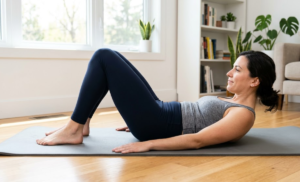
Heel taps are a beginner-friendly exercise that targets the abdominal area.
Lie on your back with your knees bent and feet flat on the floor. Lift your shoulders slightly and reach one hand toward the same-side heel. Alternate sides in a controlled manner.
This exercise helps beginners develop better abdominal engagement and endurance.
Beginner Core Workout Plan
The following workout plan is simple and easy to follow.
| Exercise | Sets | Reps/Time | Benefit |
|---|---|---|---|
| Plank | 3 | 20 Seconds | Full Core Strength |
| Dead Bug | 3 | 10 Per Side | Stability |
| Bird Dog | 3 | 10 Per Side | Balance |
| Glute Bridge | 3 | 15 Reps | Core and Hip Strength |
| Heel Taps | 3 | 20 Reps | Abdominal Endurance |
Complete this workout three times per week with at least one rest day between sessions.
Common Mistakes Beginners Should Avoid
Many beginners slow their progress by making a few simple mistakes.
One common mistake is rushing through exercises. Core training is most effective when movements are controlled and deliberate. Performing exercises too quickly often reduces muscle activation and increases the risk of poor form.
Another mistake is holding your breath. Breathing naturally during exercise helps maintain stability and allows your muscles to work properly.
Many beginners also train too often. While motivation is great, muscles need time to recover. Rest is an important part of the strengthening process.
Finally, avoid comparing yourself to others. Everyone starts at a different fitness level. Focus on gradual improvement rather than trying to match someone else’s progress.
Tips for Faster Core Strength Results
Consistency is the most important factor when building core strength. Even a short workout performed regularly can produce better results than occasional long workouts.
Pay attention to your posture throughout the day. Sitting and standing with good posture naturally engages your core muscles and supports better movement patterns.
Walking is another simple way to support core development. Regular walking encourages your body to use stabilizing muscles and improves overall fitness.
Nutrition also plays an important role. Eating enough protein and nutrient-rich foods helps your muscles recover and grow stronger after exercise.
Finally, prioritize sleep. Quality sleep gives your body the recovery time it needs to repair muscle tissue and improve performance.
How Long Does It Take to Strengthen Your Core?
Many beginners wonder how quickly they can expect results. While every person is different, most people notice improvements within four to eight weeks of consistent training.
During this time, you may experience better posture, improved balance, increased stability, and greater confidence during physical activities.
Visible abdominal changes often take longer because they depend on several factors, including body fat levels, nutrition, and overall lifestyle habits.
The most important thing is to stay patient and focus on building strength rather than chasing quick results.
Final Thoughts
Learning how to strengthen your core for beginners at home is one of the best investments you can make in your overall health and fitness. A strong core supports your body during everyday activities, improves posture, enhances balance, and helps reduce the risk of injury.
You do not need fancy equipment, expensive memberships, or advanced training methods. Simple exercises such as planks, dead bugs, bird dogs, glute bridges, and heel taps can help you build a stronger foundation right from home.
Start small, stay consistent, and focus on proper form. Over time, these simple habits can lead to noticeable improvements in strength, confidence, and overall well-being.
FAQs
1. Can beginners strengthen their core at home without equipment?
Yes. Bodyweight exercises such as planks, bird dogs, and dead bugs are highly effective for beginners and require no equipment.
2. How often should I train my core?
Most beginners benefit from training their core three to four times per week with rest days in between.
3. Is core training the same as ab training?
No. Ab muscles are part of the core, but the core also includes muscles in the lower back, hips, pelvis, and sides of the body.
4. Can core exercises help improve posture?
Yes. A stronger core supports the spine and helps maintain better posture throughout the day.
5. How long should a beginner core workout last?
A beginner core workout can be effective in just 10 to 20 minutes when performed consistently.
6. How long does it take to see results from core training?
Most beginners notice improvements in balance, stability, and posture within four to eight weeks of regular training.
Have questions about starting your home workout journey? Drop them in the comments — I actually read them all and reply.
 For more simple fitness tips, beginner-friendly workout plans, and easy habits that actually fit into a busy life, explore more blogs on AasthaFitVerse like Home Workout Plans, Fat Loss Diet Guides, and Daily Fitness Habits—everything is designed to help you stay consistent without stress