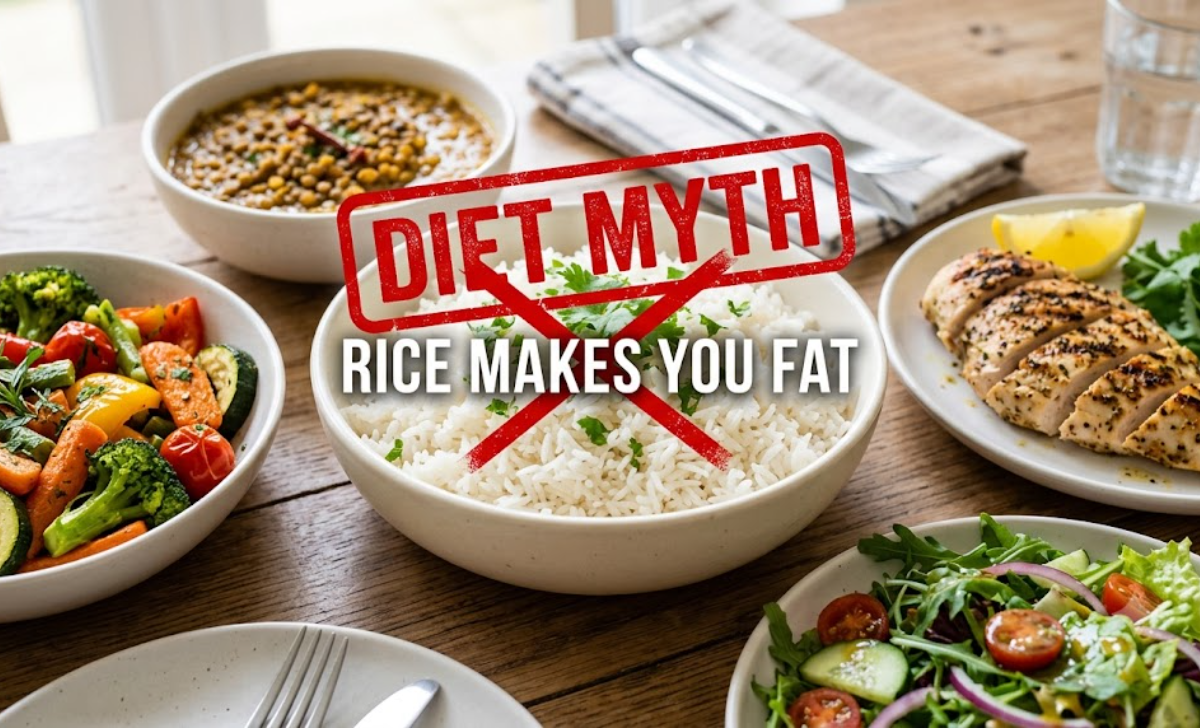
So, Is Rice Bad for Weight Loss? Short answer? No, rice is not the enemy.
Long answer? It depends on how much you eat, what type you pick, and what you pair it with.
Rice has been a staple food for billions of people across Asia, India, and the Middle East for thousands of years — and obesity wasn’t always a problem in those populations. So why does rice suddenly get all the blame now?
The truth is, rice itself doesn’t make you fat. Overeating does.
When people gain weight eating rice, it’s usually because they’re eating too much of it, pairing it with high-calorie curries or fried dishes, and not moving enough. Rice is just sitting there getting blamed for a lifestyle problem.
Let’s break this down properly.
What Is Rice, Nutritionally Speaking?
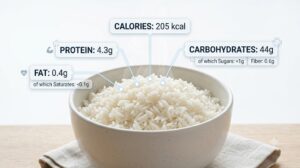
Rice is basically a carbohydrate-rich grain. A standard serving (about 1 cup cooked) of white rice gives you roughly:
- Calories: ~200 kcal
- Carbs: ~45g
- Protein: ~4g
- Fat: ~0.4g
- Fiber: ~0.6g
Now yes, it’s high in carbs. And yes, carbs can lead to weight gain if eaten in excess. But carbs are also your body’s main source of energy. Cutting them out completely isn’t the answer — managing them is.
White Rice vs. Brown Rice vs. Other Types — What’s the Difference?
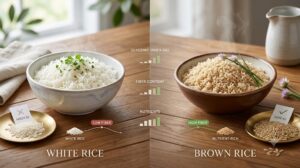
This is the part most people genuinely want to know. Here’s an easy comparison:
The takeaway? Brown rice, basmati, and red rice are better options for weight loss because they keep you fuller for longer and don’t spike your blood sugar as sharply as white rice.
But honestly? Even white rice is totally fine in controlled portions.
The Glycemic Index Problem — And Why It’s Overhyped
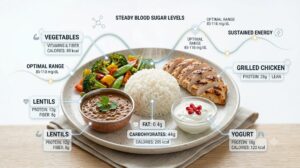
You’ve probably heard people say “white rice spikes your blood sugar!” and technically, they’re right. White rice has a high glycemic index (GI).
But here’s what those people forget to mention:
GI changes completely depending on what you eat with it.
If you eat plain white rice on an empty stomach? Yes, blood sugar spikes.
But if you eat rice with dal, sabzi, curd, or any protein and fat source, the GI drops significantly. Your body digests the whole meal, not just the rice.
So combining rice with lentils, vegetables, curd, or chicken is a totally smart move for weight management.
 Rice isn’t usually the problem—often it’s the extra ingredients and snacks. Discover these hidden calories for fat loss and the 7 foods to avoid.
The Resistant Starch Trick — This One Is a Game Changer
Here’s something most people don’t know, and it’s genuinely fascinating.
When you cook rice and then cool it in the fridge overnight, the starch structure changes. It turns into something called resistant starch, which your body can’t digest as easily.
Why does this matter for weight loss?
- Your body absorbs fewer calories from cooled rice
- It acts more like fiber in your gut
- It feeds good gut bacteria
- Studies suggest it can reduce calorie absorption by up to 50%
So if you cook your rice the night before, refrigerate it, and reheat it the next day — you’re essentially eating a lower-calorie version of the same meal.
Yes, reheating is fine. The resistant starch mostly stays intact even after reheating.
This trick works especially well for meal prepping!
How Much Rice Should You Eat If You’re Trying to Lose Weight?
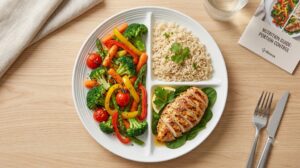
This is where most people go wrong — not the type of rice, just the portion size.
Here’s a simple portion guide:
- Weight loss goal: ½ cup to ¾ cup cooked rice per meal
- Maintenance: 1 cup cooked rice per meal
- Active individuals / athletes: Up to 1.5 cups cooked rice per meal
One cup of cooked rice is roughly the size of your fist. If you’re filling a large plate with rice twice a day and wondering why you’re not losing weight — that’s your answer.
Try filling half your plate with vegetables, a quarter with rice, and a quarter with protein (dal, chicken, paneer, fish). This is a simple and sustainable approach.
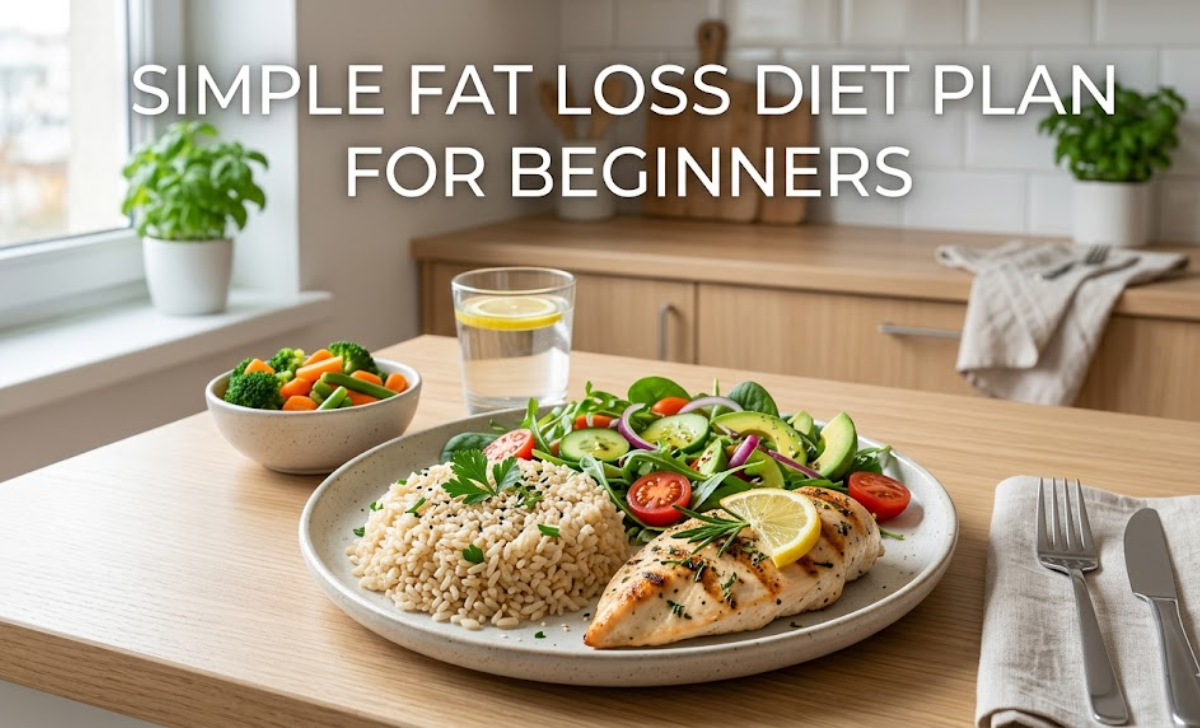
Looking for a complete eating strategy? Follow our simple fat loss diet plan for beginners to create sustainable weight-loss habits.
Does Rice Cause Belly Fat?
This is one of the most Googled questions about rice, and the answer is: not directly.
Belly fat is caused by a calorie surplus — when you eat more calories than your body burns. Rice can contribute to that surplus if you’re eating large quantities, but rice itself isn’t uniquely fattening.
There’s no magic food that targets belly fat, and there’s no single food that causes it either. It’s about your overall diet and activity levels.
That said, if you’re specifically trying to lose belly fat, reducing your overall carb intake (including rice) while increasing protein, fiber, and physical activity will help.
Rice alone doesn’t determine whether you gain or lose belly fat. If your goal is a slimmer waistline, our How to Lose Belly Fat at Home Without Equipment guide covers practical home workouts that require no gym membership.
Smart Tips to Eat Rice Without Gaining Weight

Here are some practical, everyday tips you can start using right now:
1. Control your portion size. Use a smaller bowl. Seriously, it works.
2. Always add protein. Dal, eggs, chicken, paneer, curd — protein keeps you full and prevents overeating.
3. Load up on vegetables. Vegetables add bulk and fiber without adding many calories.
4. Try the cooling trick. Cook and cool your rice for a lower-calorie option.
5. Choose basmati or brown rice when possible. They have a lower glycemic impact and more nutrients.
6. Avoid eating rice at night if you’re sedentary. If you sit all evening, a lighter dinner with less rice makes sense. If you’re active, it’s totally fine.
7. Don’t drink sugary drinks with rice. A glass of juice or soda alongside rice is a calorie bomb. Stick to water, lassi, or buttermilk.
Weight loss ultimately comes down to calories. Use our guide to find out how many calories you should eat to lose fat and stay on track with your goals.
The Bottom Line
Rice is not your enemy. It never was.
It’s an affordable, versatile, and culturally important food that billions of people eat every day. The key is portion control, smart pairing, and cooking methods.
If you’ve been avoiding rice out of fear of gaining weight, you can breathe now. Just be mindful of how much you’re eating, what you’re eating it with, and how active you are.
Weight loss is a whole lifestyle, not a “ban rice forever” decision.
FAQs
1. Is rice bad for weight loss?
No. Rice can be part of a weight-loss diet when eaten in moderation.
2. Which rice is best for weight loss?
Brown rice, basmati rice, and red rice are often preferred because they provide more fiber and better satiety.
3. Can I eat rice every day and still lose weight?
Yes, as long as your portions and overall calorie intake are controlled.
4. Does white rice cause belly fat?
No. Belly fat is caused by a calorie surplus, not by rice alone.
5. How much rice should I eat for weight loss?
About ½–¾ cup of cooked rice per meal is a good starting point.
6. Is cooled and reheated rice healthier?
Yes. It contains more resistant starch, which may help with fullness and gut health.
If you’re just starting your fitness journey, check out this 30-minute home workout plan for fat loss beginners that pairs perfectly with a balanced diet.
 Need Help?
Drop your weight, height, and goal in the comments, and I’ll help you calculate your ideal calorie intake.
If this helped you, share it with someone trying to lose fat 
For more simple fitness tips, beginner-friendly workout plans, and easy habits that actually fit into a busy life, explore more blogs on AasthaFitVerse like Home Workout Plans, Fat Loss Diet Guides, and Daily Fitness Habits—everything is designed to help you stay consistent without stress