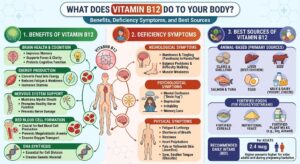
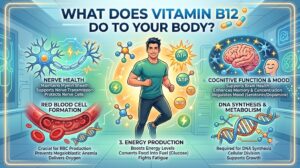
What Does Vitamin B12 Do to Your Body: Vitamin B12 is one of the most essential nutrients your body needs, yet it is often overlooked. While carbohydrates, proteins, and fats usually get all the attention, Vitamin B12 plays a crucial role in keeping your brain, nerves, blood cells, and DNA healthy. A deficiency can leave you feeling tired, weak, forgetful, and even cause long-term nerve damage if left untreated.
In this article, we’ll explore what Vitamin B12 does in your body, why it’s important, symptoms of deficiency, daily requirements, food sources, and how to maintain healthy B12 levels.
What Is Vitamin B12?
Vitamin B12, also known as cobalamin, is a water-soluble vitamin that your body cannot produce on its own. This means you must obtain it through food or supplements.
Unlike many other vitamins, Vitamin B12 is stored in the liver, allowing your body to maintain reserves for several years. However, once these stores are depleted, deficiency symptoms can become serious.
1. Vitamin B12 Helps Produce Healthy Red Blood Cells:
One of the primary functions of Vitamin B12 is supporting the production of red blood cells (RBCs).
Red blood cells transport oxygen from your lungs to every organ and tissue in your body. Without enough B12, your body produces unusually large and immature red blood cells that cannot carry oxygen efficiently.
As a result, you may experience:
- Fatigue
- Weakness
- Shortness of breath
- Pale skin
- Dizziness
This condition is known as megaloblastic anemia.
2. Supports Brain Health and Memory
Your brain depends on Vitamin B12 for proper nerve function and communication between brain cells.
Adequate B12 levels may help:
- Improve concentration
- Support memory
- Maintain cognitive function
- Reduce mental fatigue
A prolonged deficiency can increase the risk of memory problems, confusion, and neurological complications, especially in older adults.
3. Keeps Your Nervous System Healthy:
Vitamin B12 is essential for producing myelin, the protective coating around nerves.
Think of myelin as insulation around electrical wires. Without it, nerve signals slow down or become damaged.
Low Vitamin B12 levels can cause:
- Tingling in hands and feet
- Numbness
- Poor balance
- Muscle weakness
- Difficulty walking
In severe cases, nerve damage may become permanent.
4. Helps Create DNA:
Every cell in your body contains DNA, which acts as the blueprint for growth, repair, and normal function.
Vitamin B12 is involved in DNA synthesis, allowing your body to produce healthy new cells continuously.
Without enough Vitamin B12, cell division becomes abnormal, affecting rapidly growing cells like those found in the bone marrow.
5. Boosts Energy Production
Many people associate Vitamin B12 with increased energy.
While B12 itself doesn’t directly provide energy like calories do, it helps convert food into usable energy by supporting healthy metabolism and red blood cell production.
If you’re deficient, restoring normal Vitamin B12 levels can significantly improve:
- Energy levels
- Physical performance
- Daily productivity
- Exercise capacity
However, people with normal B12 levels generally won’t experience an energy boost from taking extra supplements.
6. Supports Heart Health:
Vitamin B12 helps regulate homocysteine, an amino acid found in the blood.
High homocysteine levels have been associated with an increased risk of cardiovascular disease.
Together with folate and Vitamin B6, Vitamin B12 helps convert homocysteine into other beneficial compounds, supporting overall heart health.
7. Plays a Role in Healthy Pregnancy:
Pregnant women require adequate Vitamin B12 for the healthy development of their baby’s brain and nervous system.
Low B12 during pregnancy may increase the risk of:
- Neural tube defects
- Developmental problems
- Low birth weight
- Pregnancy complications
Healthcare providers often recommend monitoring Vitamin B12 levels during pregnancy, particularly for women following vegetarian or vegan diets.
Symptoms of Vitamin B12 Deficiency:
Vitamin B12 deficiency often develops slowly because the body stores it for years.
Common symptoms include:
- Extreme tiredness
- Weakness
- Pale skin
- Tingling or numbness
- Difficulty walking
- Memory loss
- Depression
- Mood changes
- Poor concentration
- Rapid heartbeat
- Mouth ulcers
- Glossy or swollen tongue
If these symptoms persist, consult a healthcare professional for proper testing and diagnosis.
Who Is at Risk of Vitamin B12 Deficiency?
Certain individuals are more likely to develop low Vitamin B12 levels, including:
- Older adults
- Vegetarians
- Vegans
- People with digestive disorders
- Individuals who have undergone stomach surgery
- People taking certain medications like metformin or long-term acid-reducing drugs
- Those with poor dietary intake
Regular screening may be beneficial for high-risk groups.
Best Food Sources of Vitamin B12:
Vitamin B12 is naturally found mainly in animal-based foods.
Excellent sources include:
- Beef liver
- Fish
- Salmon
- Tuna
- Chicken
- Eggs
- Milk
- Cheese
- Yogurt
- Shellfish
Vegetarians and vegans can obtain Vitamin B12 from:
- Fortified breakfast cereals
- Fortified plant-based milk
- Nutritional yeast fortified with Vitamin B12
- Vitamin B12 supplements (if recommended)
How Much Vitamin B12 Do You Need?
The recommended daily intake varies by age.
General adult recommendation:
- Adults: 2.4 micrograms (mcg) per day
- Pregnant women: 2.6 mcg
- Breastfeeding women: 2.8 mcg
Individual needs may vary, so consult your healthcare provider if you suspect a deficiency.
Can You Take Too Much Vitamin B12?
Vitamin B12 is considered very safe because it is water-soluble.
Excess amounts are generally excreted through urine, and no upper safety limit has been established for healthy individuals.
However, supplements should still be taken according to medical advice, especially if you have underlying health conditions.
Tips to Maintain Healthy Vitamin B12 Levels:
Follow these simple habits:
- Eat Vitamin B12-rich foods regularly.
- Include dairy products and eggs if you consume them.
- Consider fortified foods if you follow a plant-based diet.
- Get your Vitamin B12 levels checked if you experience persistent fatigue or neurological symptoms.
- Follow your healthcare provider’s advice regarding supplementation.
Vitamin B12 is far more than just an energy vitamin. It is essential for healthy blood formation, proper brain function, nerve protection, DNA production, heart health, and overall well-being. Because deficiency develops gradually, many people don’t recognize the warning signs until symptoms become more serious.
Maintaining adequate Vitamin B12 through a balanced diet, fortified foods, or supplements when needed can help support long-term health and prevent avoidable complications. If you frequently experience fatigue, numbness, or memory issues, it may be worth discussing Vitamin B12 testing with your healthcare provider.
For more simple fitness tips, beginner-friendly workout plans, and easy habits that actually fit into a busy life, explore more blogs on AasthaFitVerse like Home Workout Plans, Fat Loss Diet Guides, and Daily Fitness Habits—everything is designed to help you stay consistent without stress