Best Foods for Muscle Recovery in 2026:
You finish a hard workout. Your legs hurt. Your phone shows you ten reels saying you must eat protein in the next 30 minutes or your gains are wasted.
Relax. That’s not true.
New research from 2024–2026 shows that the “30-minute window” idea is mostly a myth. What actually matters is eating the right foods, in the right amount, every day. This guide explains the science in simple words, and gives food lists for non-veg, vegetarian, and vegan eaters.
 New to healthy eating? Start with our guide, How to Start Eating Healthy When You Have No Idea Where to Begin.
Myth: You Must Eat Right After Your Workout
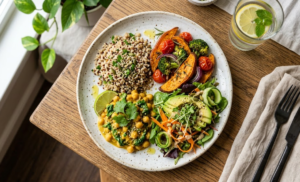
For years, people believed there is a tiny 30-minute “window” after exercise. Miss it, and you lose your gains. This idea is called the “anabolic window.”
But a 2024 research review on recovery nutrition found something different. It says that while eating protein soon after exercise can help, strict timing is not as important as once believed. What really matters is your total protein and carbs across the whole day, not one perfect meal right after the gym.
So if you can’t eat within 30 minutes, don’t panic. Eat well across the day instead.
How Much Protein Do You Need?
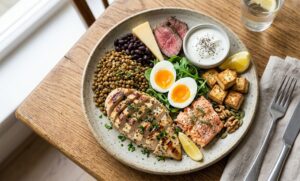
The International Society of Sports Nutrition (ISSN) gives simple, clear advice:
- Eat protein within about 2 hours after your workout
- Eat 20 to 40 grams of protein every 3 to 4 hours through the day
- Eat about 1 to 1.2 grams of protein per kg of your body weight, every day
So if you weigh 70 kg, aim for roughly 70–84 grams of protein a day, spread across meals.
Not sure how to track your numbers? Read How to Track Calories Without an App? (Simple Beginner Method That Actually Works).
Why protein matters: exercise breaks down muscle. Protein gives your body the building blocks to repair that muscle and make it stronger.
Don’t Forget Carbs
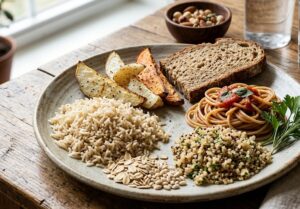
Carbs are not the enemy. During a workout, your muscles use up their stored fuel, called glycogen. Eating carbs after a workout helps refill that fuel, so your body can focus on repairing muscle instead of just running on empty.
Good carb sources: rice, oats, bananas, roti, potatoes, sweet potatoes.
Worried rice will ruin your weight loss? It won’t. Read Is Rice Bad for Weight Loss? The Truth About Eating Rice and Still Losing Weight in 2026.
The Most Research-Backed Recovery Food: Tart Cherry Juice
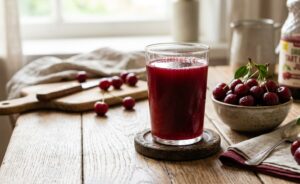
This one surprises people, but it has serious science behind it.
In 2006, Dr. Declan Connolly at the University of Vermont ran a study. College students drank tart cherry juice or a fake drink (placebo) twice a day for 8 days. On day 4, they did a hard arm exercise. The cherry juice group had less pain and less strength loss than the placebo group.
Since then, many more studies have shown tart cherry juice helps reduce soreness after marathons, cycling, and other intense exercise. The juice contains antioxidants called anthocyanins, which may fight inflammation, similar to how a mild anti-inflammatory medicine works.
It’s not magic, and scientists still don’t know the exact “best dose.” But for a simple fruit drink, it has unusually strong research support.
Simple way to use it: drink it for a few days before and after a hard workout, not just once after.
Fatty Fish and Omega-3s
Fish like salmon, mackerel, and sardines contain omega-3 fats. A 2024 research review found that omega-3s can lower a substance in the body called IL-6, which causes inflammation after exercise. Other research shows omega-3s can reduce muscle soreness too.
Simple way to use it: eat fatty fish 2–3 times a week, if you eat fish.
Now Let’s Talk Foods by Diet Type
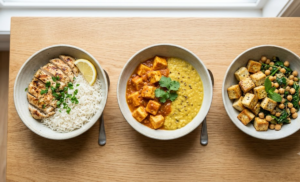
Good news: no matter what you eat, you can recover well. Here’s how to do it for each diet.
For a full daily meal plan, see High Protein Diet Plan for Muscle Gain: Simple Daily Meal Guide for Veg, Non-Veg & Vegan.
For Non-Vegetarians (Meat, Fish, Eggs, Dairy)
You have the most variety, and animal protein is digested and used very efficiently by the body.
- Eggs – Cheap, complete protein. Great after workouts.
- Chicken breast – High protein, low fat. Easy to cook in bulk.
- Fish (salmon, mackerel, sardines) – Protein plus omega-3s for less inflammation.
- Greek yogurt – Contains casein protein, which digests slowly. Great before bed, since your muscles keep repairing all night.
- Lean red meat – Good source of protein, iron, and zinc, which also help recovery.
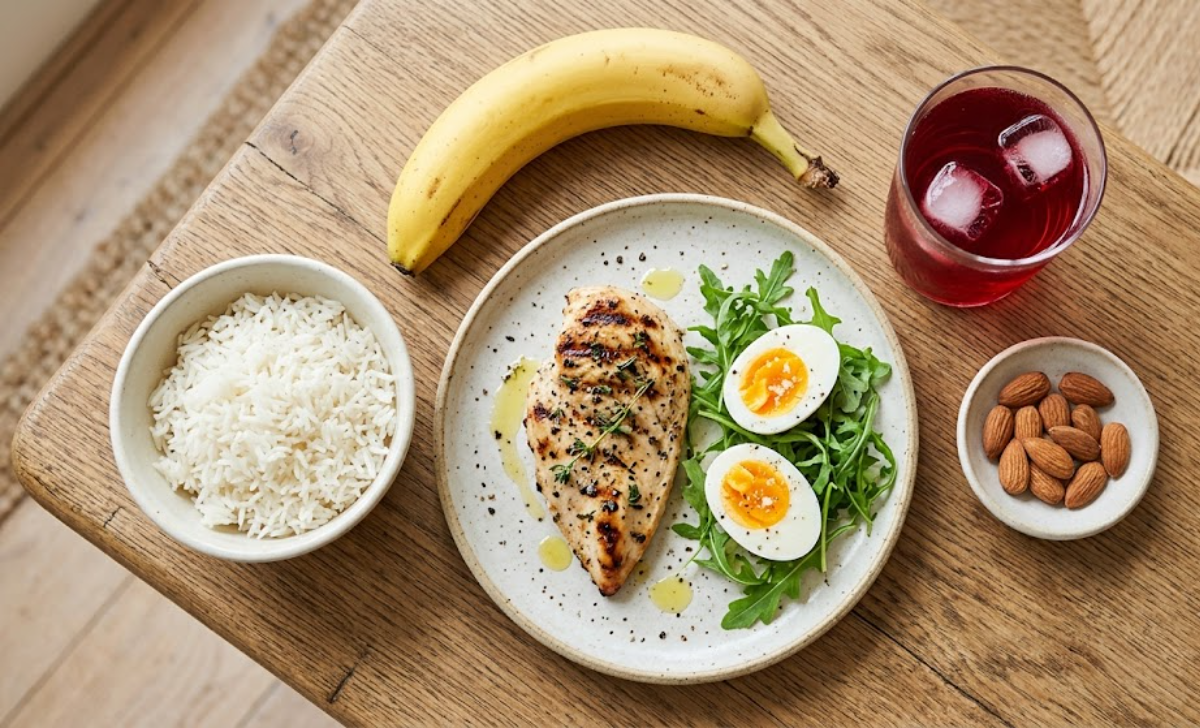
Simple daily plan: eggs or chicken after workout + rice or roti for carbs. Greek yogurt at night. Fish 2–3 times a week.
For Vegetarians (No Meat or Fish, But Dairy and Eggs OK)
You have almost everything non-vegetarians have, minus meat and fish.
- Eggs – Still one of the best protein sources, if you eat eggs.
- Paneer – High protein, works well with rice or roti.
- Greek yogurt or curd – Good slow protein, especially at night.
- Milk – Simple, easy way to add protein through the day.
- Dal (lentils) with rice – A classic combo. Together they give a more complete protein than either alone.
- Chana (chickpeas), rajma (kidney beans) – Good plant protein, plus fibre and minerals.
Simple daily plan: paneer or eggs + rice or roti after workout. Dal with every meal. Curd or milk at night.
For Vegans (No Animal Products at All)
This needs a little more planning, but research shows it works just as well if you do it right.
A 2025 research review on plant proteins found something important: a single plant protein, like only pea protein, is usually weaker for muscle recovery than animal protein. BUT, when you mix plant proteins together- like pea, rice, and other sources, the mix works almost as well as whey protein, as long as you eat enough of it (around 30 grams, with enough leucine, an amino acid that helps trigger muscle repair).
The simple rule for vegans: always combine plant proteins. Don’t rely on just one.
- Dal + rice – A perfect example of combining plant proteins.
- Soy products (tofu, soy milk, edamame) – One of the strongest single plant proteins available.
- Chickpeas, rajma, lentils – Combine with rice or grains for best effect.
- Peanuts, almonds, chia seeds – Add healthy fats and some protein.
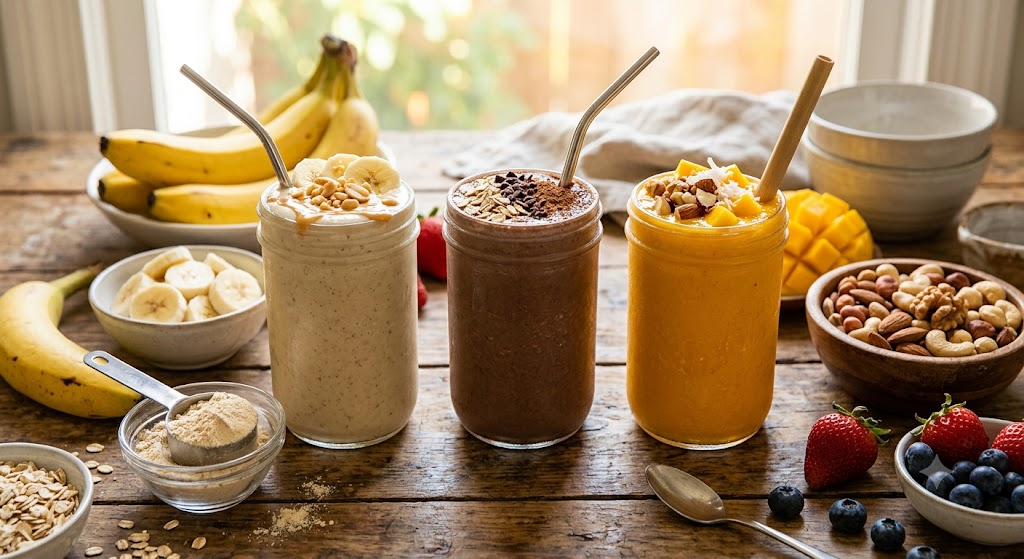
- Plant protein powder blends (pea + rice protein) – A simple way to hit higher protein totals without much effort.
- Bananas, oats, sweet potatoes – Good carb sources to refill energy after workouts.
Simple daily plan: tofu or soy milk + rice or oats after workout. Dal-rice combo at most meals. A pea-rice protein blend if you struggle to hit your protein number through food alone.
A Simple Recovery Day, For Anyone
No matter your diet, the basic plan looks the same:
- After workout: protein + carbs together (within about 2 hours)
- Through the day: protein every 3–4 hours
- A few times a week: anti-inflammatory foods like fish (non-veg) or nuts and seeds (veg/vegan)
- Before bed: a slow protein like curd, paneer, or a soy product
- During hard training blocks: tart cherry juice, a few days before and after, if soreness is an issue
Common Questions, Answered Simply
Do I have to eat right after my workout? No. Eating well across the whole day matters more than rushing to eat in 30 minutes.
Is tart cherry juice worth trying? Yes, it has more real research behind it than most “superfoods.” It’s not magic, but it can help with soreness.
Can vegans build and recover muscle as well as non-vegetarians? Yes — but only if you combine different plant proteins and eat enough of them. Don’t rely on just one plant protein source.
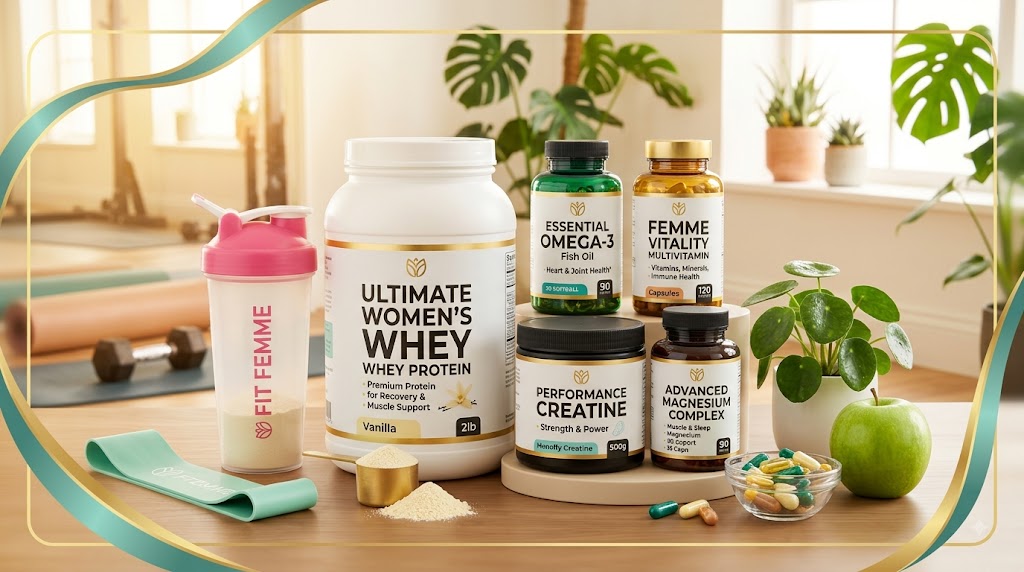
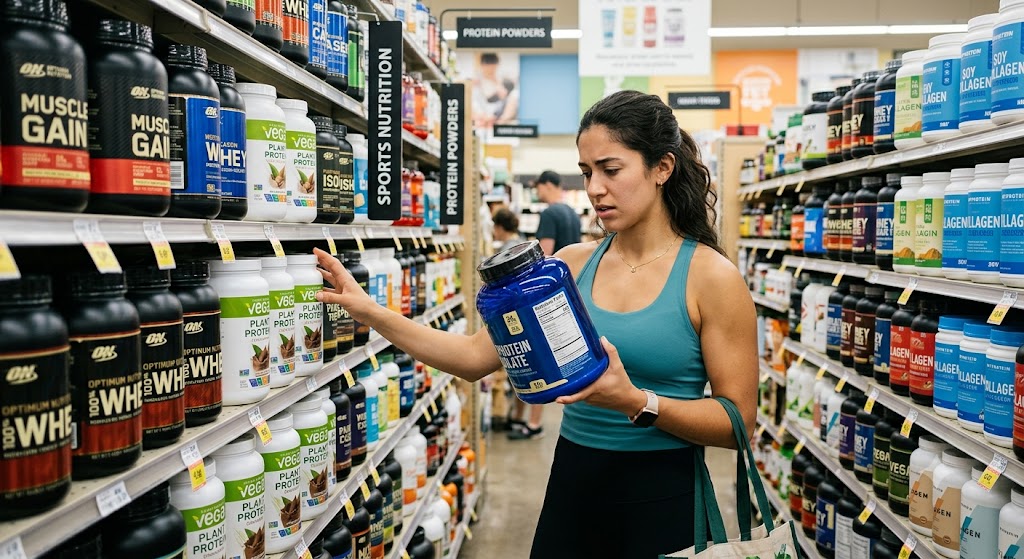
Do I need protein powder or BCAA supplements? Not necessarily. If you already eat enough protein from food- meat, eggs, dairy, or a mix of plant proteins, you’re already getting what supplements offer. Supplements are just convenient, not magical.
What about creatine? Should I take that too? Creatine is a different supplement. It helps with strength and power, not direct muscle repair. Read Should You Take Creatine? A Complete Guide for Men and Women for the full picture.
The Real Takeaway
There’s no single “miracle food” for muscle recovery. There’s no need to panic about eating within 30 minutes either.
What works, for every diet type, is simple:
- Eat enough protein, spread through the day
- Don’t skip carbs
- Add a few research-backed extras like fish or tart cherry juice if you train hard
- Stay consistent, week after week
That’s it. No tricks, no shortcuts- just steady, simple habits that the research actually supports.
For more simple fitness tips, beginner-friendly workout plans, and easy habits that actually fit into a busy life, explore more blogs on AasthaFitVerse like Home Workout Plans, Fat Loss Diet Guides, and Daily Fitness Habits—everything is designed to help you stay consistent without stress